Monday, January 20, 2014

Broadly speaking...


A patch of broad beans in the winter garden is a fine thing. We have 'unpodding' sessions at the kitchen bench. Removing the beans from their pods is a little like taking babies out of sleeping bags. What is in those skins because my fingers are stained nearly black afterwards.

Unsurprisingly, a lot of people tell me they absolutely cannot stand them as a vegetable. For some it's the texture, for others it's flavour, and I suspect a fair few simply find them unappealing to look at when they've been boiled in their flubby grey skins. Cooked like this, they remind me of 'timptees' , a term my father coined to describe wrinkly fingers and toes which have been soaking in the bath too long. It's a bit fiddly to remove the grey skins, but the green bean inside is such a tempting, lush colour I think it's definitely worth the bother. The Italians have crafted a few different recipes using peeled beans - including puree's. Broad bean purée with wild chicory is a typical Puglian dish in Italy. including a 'broad bean pesto' style recipe, which can be used as a stir-through pasta sauce. I highly recommend this. In the US, they're combined with sweetcorn to make succotash. I was quite fascinated to read that the European way of preparing beans as an immature and fresh green vegetable is relatively new.

Vicia faba, the broad or fava bean, is one of the oldest known plants in cultivation, dating back to about 6000 BC. It's an ancient staple food of many middle eastern and North African cuisines, and they tend to use it fully mature, once it has dried to a hard bean. In Egypt, it is used in two national dishes - ful madames (literally 'buried beans') and ta'amia, an ancient falafel dish considered superior in every way to the chickpea concoctions favoured further north. In Ethiopia, beans are ground into a flour known as shiro and used as a staple food.

So now I know what to do with all those beans which get missed during harvest and transform into "has beens" as my mother would say.

I grew some of the English variety of Crimson-flowered broad beans last year for the Central Tree Crops Research Trust, and they went very well. The plants suffered a bit toward the end of the summer period from fungal diseases, but the seed crop matured and I harvested about 40 good seeds for every seed I had originally planted. And they were just a marvellous sight in the vegetable patch. The crimson-flowers were highly ornamental. I kept a little of the seed back for planting again this year, but I may not have needed to, as it appears to have self-seeded pretty well from discarded pods.


I found some roasted broad bean snacks from China the other day in my local Asian market. Great tasting, a little addictive. Every bit as good as peanuts.  I'm going to have a go at the following recipe...

If using fresh beans, eliminate the soaking and boiling step and try roasting straight from the pod.

125g dried split broad beans
1 tsp coarse sea salt (iodised)
4 tsp olive oil

1. Soak the beans in water for 8 hours, or overnight.
2. Drain and rinse well. Put in saucepan and cover with 500mls of water.
3. Bring to a boil and boil for 7 minutes to soften them slightly.
4. Drain and allow to cool slightly.
5. Pre-heat the oven to 180 degrees C.
6. Mix the salt and olive oil and toss the beans in the mixture until coated.
7. Spread the beans on a baking tray (greaseproof paper will help to stop them sticking to the tray) and roast for 25 minutes, or until golden.
8. Allow to cool on the tray and try to leave a few for everyone else to try!

It would be worth experimenting with a few different spices as well, such as paprika.


I've been given some purple seeded beans by a gardening friend this year. Not sure what they are. May be the Estonian purple-seeded bean, or the variety Red Epicure which has white flowers. It important to plant different varieties at different times to keep varieties pure, but it could be interesting to see what results from crosses between the different varieties. Can learn a bit from others in this area:
http://topveg.com/2009/08/broad-bean-midwinter-a-new-strain/



Grasping the nettle...

I left some nettle seedlings in my tomato patch this year, in effect reserving some dinner tables for the native Red Admiral butterfly. Over a dozen velvety black caterpillars have survived  - as lovely and prickly as their host plants. I do worry the older diners have eaten more than their share, there is not much left for the younger ones coming through. Nature in all its grand tapestry is not always fair in the allotment of meal portions.


Red Admiral caterpillars on the native nettle, Urtica incisa.
New Zealand Red Admirals used to be a lot more common than they are today, but parasitic wasps and a lack of preferred food plants have diminished their numbers over the past decades. The tree nettle - Urtica ferox - is the preferred food host plant but it's much too ferocious for the average home garden. The smaller growing scrub nettle (U. incisa) is far more accommodating, and seems to be an acceptable alternative to the Red Admiral.
New Zealand Red Admiral butterfly


Nettles are not just for butterflies, of course. They have a long history of use as a medicine and food source for people too. As one of the most nutritious plants on the planet, extremely high in protein, iron, and the vitamins C, E and A, no wonder they clothe themselves in fine, syringe like stinging hairs! Boy can they sting!

I remember as an eight year old living in England, trying to leap the stone wall at the bottom of the garden and clear the nettle patch on the other side. It was always an interplay between the stinging nettles and the dock plants growing nearby. If I got decently stung, I'd chew on a dock leaf and use the saliva and dock sap mixture to calm the red welts on my hands and legs. Seems these days we're not supposed to let kids near stinging nettles just in case they get stung (hear that mum?). Nettles are things to avoid completely if you follow the "Safety in pre-school centres: plants to avoid" guidelines. 

So the only caterpillar pupation a three year old is going to witness is the monarch on its nice and safe swan plant host. Don't get me wrong. I would encourage any person, young or old, to marvel in the life cycle of any butterfly.  And monarchs are the royal celebrities of the butterfly world. Red Admirals are a little more unassuming but every bit as delightful. Cabbage whites, yeah maybe not so much ;)

I think nettles must be in decline in the UK, as there is a National "Be Nice to Nettles Week" to encourage people not to spray their verges and leave some patches of nettles free for the wildlife. Mind you, there is a "week" for everything these days - even a "Rubber Spatula Awareness Week" if my dad was to be believed. Anyway, the Monarch Butterfly New Zealand Trust has prepared a "Beginner's Guide to Nettles" if you happen to be interested in finding out more about supporting nettles in your neighbourhood. Seeds are occasionally offered for sale by Trust members, and some NZ plant nurseries even sell plants. I've tried growing seedlings in pots and hanging baskets, but they don't do nearly as well as in a sheltered spot in the garden, free from an over enthusiastic weeder. 

I'm going to save the seed and collect it this year and plan a larger area for nettles next spring. I'm tempted to harvest the young nettles and try some infusion teas and maybe even nettle soup as a pick-me-up after winter - supposedly very good for the constitution given its high nutritional content. Or maybe I could use the leaves to make a liquid tea to feed the greenhouse plants. Most likely I won't get around to any of that, and there'll be a bigger patch next year for the butterflies.

I will however tell the kids to avoid running through the nettle patch (accepting that nettle stings are something they will get over). I'll show them what a dock plant looks like, and how to chew and spit it, just in case! 


Thursday, August 1, 2013

Germplasm

I love the word germplasm! It sounds all organic and squelchy, like wet bits inside a plant cell. \But it's not an onomatopoeic word (if that is a word in itself). Wikipedia defines germplasm as meaning a collection of genetic resources for an organism. So for example, for plants, germplasm can be a stored seed collection or for trees, a nursery or botanical collection (like my favourite Breadfruit Institute). In a world where humans are bent on taking over and turning every bit of usable land into cultivation, roads or cities, conserving germplasm resources becomes very critical.

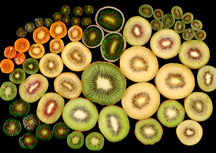
Kiwifruit germplasm - Plant & Food Research New Zealand
In an earlier post, I talked about the ancestry of wheat - quite a remarkable breeding effort by early human civilisations in weaving something quite harvestable and edible out of a collection of a couple of different grass species, in a series of crosses. How these early plant breeders, 10,000 years ago, mucked around with the less than "useful" weeds like Goat's grass (Aegilops tauschii ) and einkorn wheat (Triticum urartu) to form such a staple crop as wheat, we can only ponder now. Various groups are now using these ancestral parents to try to make new crosses to improve on modern wheats, such as the National Institute of Agricultural Botany in the UK. But they could not do so if it weren't for the efforts of dedicated people over the past 80 or so years, collecting germplasm from wild populations and saving them in seed banks around the world.

Some of the most famous germplasm centres in the world are the Svalbard Global Seed Vault in Norway, CIMMYT in Mexico, and ICRISAT in Syria. New Zealand has it's very own centre in the Margot Forde Germplasm Centre - a collection or pastoral and arable species which form the basis of agricultural production in New Zealand. The collection superviser, Zane Webber, heads overseas twice a year on collection trips into places like Sicily and Russia, hunting out new sources of ryegrasses and clover which may be of benefit to New Zealand plant breeders.

I was recently interviewed by Richard Loe on Radio Live about the changes the Ministry for Primary Industries has madeto enable New Zealand breeders better access to seed within this collection.
htt\/www.radiolivesport.co.nz/Audio/Katheryn-Hurr---MPI/tabid/454/articleID/14923/Default.aspx and here http://www.radionz.co.nz/news/rural/214563/rules-change-for-imported-seeds


It's not impossible for non-scientists to be involved in germplasm conservation. Kay Baxter of the Koanga Institure in Northland is a great example of a woman with a mission to save New Zealands heritage vegetable and fruit tree varieties. And Mark Christensen of the Central Tree Crops Research Trust (part of the Tree Crops Association) is also coordinating some large projects around apples, tomatoes and beans.


Plenty of inspiration there.

Monday, August 6, 2012

It's bean a while...

…since I last wrote my blog. Suffice to say I have moved house twice, and now a year later, new gardens are dug, the compost bins are all lined up in a row like little daleks…and the botanical adventures continue. Today's blog is about beans.

The first time I encountered soybean plants growing, I had no idea what I was looking at. They were potted up in a greenhouse at the Donald Danforth Plant Science Centre in St Louis, Missouri. Soybeans  are so common in the US the plant scientist must have wondered what planet I'd grown up on, but in all fairness they are not commonly grown in New Zealand. 

Soybeans ready for picking at the green-stage.
Five years later, I tried some Edamame beans cooked in the pod at a Japanese restaurant in Parnell, Auckland. They were so delicious that when I spotted some seeds in the Kings Seeds catalogue, I decided I'd have a go at growing them myself.  I put them in the greenhouse because I wasn't sure how they'd go in a cool-temperate climate, and they went very well indeed. The leaves were intensely desirable to caterpillars, however, with infestations of the dastardly creatures reducing the leaves to mere veins. No wonder commercial bean crops are either heavily sprayed with pesticides or genetically modified with a Bt toxin to stop these critters. In my small patch, squeezing caterpillars between my fingers worked well! I harvested a few beans at the fresh shell-stage, as shown in the picture above, which my work colleague assured me was the right stage to eat them green (as edamame). At this stage, they're often called butterbeans, and they are harvested just as the pods begin to lose their bright green colour. I was surprised by the volume of beans I got from a dozen plants. I tried cooking them in the pods, but the pods were hairy and tough. I’m not sure how that Japanese restaurant prepared them in this way.

They were quite delicious shelled green and cooked for five minutes or until tender. I froze a couple of small bags of them to use later in the year. Very nice added to stir fries or to dishes where you’d normally use peas or other beans, like broad beans. The most time consuming thing was shelling them - they are a lot more fiddly than peas, but then I did find a website which recommends steaming them in their pods for a few minutes, leaving them to cool, podding them and then re-cooking them.

If you  want to save the seeds, or store the beans to eat later, you need to leave the beans to mature further and dry in the pods. But then they need to be soaked and cooked a lot longer. 
 
They are very high in complete protein and provide lots of the essential amino acids and I’m quite happy to grow them again. I’m going to try growing them outside this year.


Buoyed by my beans experience, I’ve volunteered myself for a project being run by the Central Tree Crops Research Trust in Whanganui "Adopt an Ancient Bean”. The project aims to enlist New Zealander's to grow 29 ancient varieties of beans sourced from heirloom seed organisations across the USA. An American seed saving group have been growing the beans to meet the phytosanitary import requirements of New Zealand. The varieties which have been selected include some ancient and beautiful North American Indian varieties (Hopi), some traditional Mexican varieties, as well as some early American Settler varieties. I'll let you know if they pick me to grow a variety and update progress :)


Friday, August 12, 2011

Stretchy ice-cream

This year is the "Year of Chemistry" and in August we also have "Wellington on a Plate" - so to celebrate both, the Chemistry Department of Victoria University invited Kent Kirshenbaum from New York University to present a couple of lectures this week on Chemical Gastronomy. Kent has founded a group in the States called Experimental Cuisine, which aims to understand the chemical and physical process of cooking, and is on a mad-cap adventure to find alternatives to traditional ingredients.  For example, pavlova without egg whites?! The idea is that chefs can learn a thing or two from chemists, and likewise chemists could learn a thing or two from chefs. Good stuff.

Kitchen chemistry is hot news right now - Kent said it was listed number 5 in Time's Top 10 list for 2010, wedged in between global warming and stopping terrorism! Certainly we've been enjoying our cooking shows on TV the past few years, learning how to make mango caviar using sodium alginate (the ions form a bridging link, pulling the polymers together), and learning that by precisely cooking an egg at 62.5 degrees C (in a water bath which looks suspiciously like the one in my old molecular biology lab) the cooked yolks are supple enough to be rolled out like pastry. Hmmn, that gives me a few ideas... If you want to read some more on this subject, and try some experiments yourself, check out  Cooking for Geeks by Jeff Potter and Molecular Gastronomy by Herve This.


But what interested me the most in Kent's talk was the prospect of making my very own stretchy ice-cream from none-other-than one of my all-time favourite plants, Amorphophallus konjac! Traditional stretchy ice-cream, or Salep Dondurma as it's known in Istanbul, is made from milk sweetened and flavoured with mastic, an aromatic resin, and thickened with salep, the powdered bulbs of wild orchids. Not just any orchid, but orchids from the Anatolian mountains - Orchis mascula or Orchis militaris - which look a little like a Hyacinth in flower. The orchid bulb contains a mucilaginous carbohydrate called glucomannan which, when dissolved in milk, binds up and blocks the movement of water molecules, thickening the milk. "Salep" is an Arabic word for "fox testicle", presumably referring to the shape of the orchids bulb (I am unable to confirm the likeness due to the general shortage of Vulpes vulpes in New Zealand). Salep is becoming expensive and hard to source, as the orchids are becoming increasingly scarce in the wild. But good news! there are other botanical sources of glucomannans which can do the job.  Enter again my dear Amorphophallus...


I've had this plant for over twenty years now. It comes up every spring time, forms this luscious green canopy with a leopard-spotted trunk, always attracts lots of attention and comments, and then dies back at the start of the winter to it's underground corm. When the plant has stored up enough energy, it flowers - an enormous black/purple arum flower on a stalk, which stinks like a dead hedgehog... Mine has only flowered twice in twenty years - and it goes outside when it does! Each year the big corm creates lots of new little corms, so eventually I had a small forest in my pot, and I have given tens of them away over the years. Kew Gardens have a giant species - Amorphophallus titanum - standing about 3m tall with a trunk about 15-20cm in diameter. I will try and find my photo of it and post it here.

 
Amorphophallus in flower - phew
Amorphophallus titanum, at Kew Gardens in London.


Anyway, back to the stretchy ice-cream.... Amorphophallus konjac also has a high glucomannan content, and can apparently be used as an alternative for salep. Konjac flour looks to be readily available in Japan, and is used for all sorts of things. But I'm wondering, in the spirit of having a botanical picnic, if I can just dry a corm or two out and process the flour myself at home?


Should you wish to try it too, here is the recipe for Konjac Dondurma
2 grams mastic (optional)
8 grams konjac flour
1.6 L whole milk
410 grams sugar
The corms
2 Litres of liquid nitrogen (for cooling. You could probably cool the ice cream in the usual, less dramatic, way. Maybe an ice cream maker would work too?).

I'll let you know how mine turns out.


Friday, June 24, 2011

Wonderful breadfruit!

If you've never heard of breadfruit before you must definitely read up on this wonderful plant, it's story is fascinating! Artocarpus altilis is the scientific name. It grows as a medium to large tree, with fabulously large deltoid leathery leaves and large green ovoid fruit. The fruit are very dense in carbohydrates, vitamins and minerals - and can be cooked in many different ways, similar to potatoes. It was the food that fueled the Polynesian migrations across the Pacific - from west to east - with the canoe people taking fruit for food on the way, and little plants to start off new plantations in their newly-discovered islands. Closely related varieties which are seeded exist in New Guinea - and then from west to east, progressively, the varieties have fewer seeds until they are completely seedless in Samoa and Tahiti. Did seedlessness occur because the Polynesians selected for seedlessness, or was it a consequence of them propagating the plants from sprouts from the base of the tree (vegetative propagation)?

Breadfruit tree in Samoa
When Joseph Banks accompanied Captain Cook on the Transit of Venus voyage to Tahiti in 1769, he was floored by breadfruit! In England, carbohydrates were hard-won through cultivation of the land (to grow potatoes and wheat), while here in the Pacific they only need be plucked from the trees! On his return to England he convinced the King that breadfruit would be extremely useful in the Caribbean Islands, providing food for the slaves working in the sugarcane plantations - and the botanical ark (alias the Bounty) was sent forth with Sir William Bligh as Captain, Fletcher Christian and crew to obtain the breadfruit tree and bring it back to England. Did you know that the seedless breadfruit was the root cause of the infamous mutiny of the Bounty? Polynesians had perfected the art of rooting these cuttings, but it apparently took the crew of the Bounty many months to achieve success - by which time, the crew had fallen in love with  local Tahitian beauties and were a little reluctant to pull-anchor and sail back to England. Their subsequent mutiny and voyage to Pitcairn Island, where they burnt the boat and thus stranded themselves there (there are no trees on Pitcairn worthy enough to build canoes or boats, so they were totally stuck there) is, as they say, history.

Larger fruited variety.

I've just got back to Wellington from a trip to Samoa to see these trees up-close and personal, and give them a good old hug. I was expecting that each family would have a tree in their garden - but I was not expecting to see as many trees as I did, they were absolutely everywhere! The most common variety had round to ovid fruit, but there seemed to be a fair amount of variation in tree size, leaf shape and fruit numbers/characteristics.


Fugalei Market in Apia, Samoa
The Fugalei market in Apai had the most incredible variety of fruit and vegetables - but I did not see any uncooked breadfruit of these common varieties for sale, possibly because every family has a tree so why buy them? (Breadfruit are called ulu in Samoa). I did however find some breadfruit crisps (which were delicious), and a completely different variety of breadfruit which was huge. It probably weighed 3 kilograms - and I can't imagine how these would be supported by a tree's branches! My Samoan host, Lele, told me this variety is called Aveloloa, which is a bit cheeky in Samoa because it refers to its appearance not unlike a large-woman's breast. Lele self-consciously giggled when she told me the name, and then told me it is traditionally used to make a dish called Taufolo. First the fruit is baked whole in an umu (oven), which is covered with coconut fibres. When the fruit is cooked, it is peeled then mashed and formed into balls. A dipping sauce is then made with coconut cream and sugar, heated with a hot stone from the umu and the Taufolo are dipped into this. Sounds fabulous! Lele's husband Sau prepared an umu-cooked breadfruit for me for my last night on Savai'i island, with coconut cream to dip it into. It was absolutely delicious - it's texture was much softer and creamier than potato.
Me with a large breadfruit variety called Aveloloa at the Fugalei Market in Apia.


In the 1980s, the botanist Dr. Diane Ragone went all through the Pacific collecting different breadfruit varieties and has set up a collection at The Breadfruit Institute, at the National Tropical Botanical Gardens in Hawai'i. She has worked tirelessly to promote this fruit for food security in developing nations, and has worked with a German biotech company who have successfully managed to initiate the plants in tissue culture. A New Zealand company in Auckland is one of only a few worldwide who have managed to micro-propagate the tissue cultures and initiate whole plantlets and I have great hopes that this wonderful plant will soon be propagated en masse to be sent to developing nations in Haiti, Honduras, Caribbean and African nations - so that families and local communities are able to produce food in abundance, much like I saw in Samoa!

Tuesday, May 3, 2011

Marvellous baobabs!

I don't usually "do" favourite things because I just have such a hard time trying to decide between all the possibilities. But I am decidedly decided on trees - my favourite is most definitely the Baobab. Without equal, it is the most magnificent and grotesque tree you could ever hope to encounter. Swollen trunks, leafless  in the dry season, the trees in Dr Seuss books have nothing on the Baobab!All hands in the air like they just don't care.


This tree is growing in Derby, Australia.
During the rainy season, they soak a huge amount of water into spongy fibers in their massive trunks and roots. They don't grown annual rings like other trees, so while it's generally assumed they live for more than 2000 years, it's impossible to tell.  The upper part of the trunk is often hollow and no doubt used as shelter by nomadic peoples and stock over the ages. In the early pioneering days in the Kimberley, the Boabs (as they are known in Australia) even had gates fitted to the openings in the trunk and were used as prisons! Imagine that?


There is 1 species in Australia, 6 in Madagascar and 1 in the African savannah - proof (if we ever needed more) of the existence of the great southern super-continent Gondwana. I was wishfully thinking I'd like to attend the World Botanical Congress  in Melbourne in late July, and most especially the eight day trek across the Kimberley  from Broome to Kununurra. I've always wanted to go on a guided trek through this bit of Australia - it is home to some of the most spectacular, ancient and diverse flora and fauna in Australia, and it's also smack in the middle of Boab country. Alas at ~NZ$5,000 for the trek, it was a bit too pricey for me at this stage (and has actually been cancelled now), so for now I will just marvel these trees from afar and plan for my adventure another day. A day when I can get up-close in person to a few trees, give them a great big hug and tell them they really are my favourites.

Thursday, April 21, 2011

Poroporo update

The poroporo experiment has not been a complete disaster, but you'd have to ignore a few setbacks to agree with me on this point.
The summer was actually quite a hot and dry one this year, which makes a nice change for Wellingtonians, but was not ideal for the garden! I assumed poroporo was weedy enough in it's tendencies to battle on regardless, and so did not make special effort to water them through the really dry periods and they suffered a bit. At one stage I thought they had been attacked by psyllids containing the Solanaceous Liberibacter bacterium, but the brown lesions and wilting were most likely symptomatic of the dry conditions and physiological suffering which attends this. Thank goodness there are no laws against the mistreatment of plants!

We expanded our menagerie in late summer to include two gold-laced Wyandotte hens, whose favourite "in-between-meal" snack seems to be poroporo leaves. And even though the plants behind the chicken coop are now bereft of leaves to a height of one metre, chicken max headroom, this doesn't seem to have set the plants back too much. Indeed, they are no further behind the other poroporo along the back fence which haven't received such close inspection by their Galliform neighbours. There are few flowers, however, which means scant fruit.

I must admit here to being a bit chicken myself. The plant in the front garden, which is now very well established, has been producing ripe fruit for months. Not just ripe but exceedingly ripe, ripe to the point where the skins split open and they fall to the ground and rot. At any point I could intervene in this cycle of life and actually try one, but it took me until yesterday to bolster enough courage to actually do so. And I did. And as a fruit it is quite indifferent. Full of seeds, the orange flesh tastes something like a guava. Actually not unlike the taste of a pepino. I am not convinced they would make good jam. All seedy like raspberry but without the delicious flavour. Jelly perhaps. Cooking the fruit to a mush and straining over night in a jelly bag, and then boiling the next day with sugar to setting point (if there is enough pectin in the fruit) - but I'd need half a kilo of fruit to make a single jar I would think, which looks unlikely this year.

And besides, the first aim of the experiment was science. How long would it take to increase fruit size under selection for larger fruit? I have to own now, having seen the fruit under macroscope, that this is most certainly not going to be a commercial enterprise!

Thursday, February 17, 2011

Solanum aviculare - n=23

So following on from last week, where I found out that the chemical oryzalin could be used to accelerate plant breeding by doubling chromosomes - I was attempting to find out whether I needed to obtain a Growsafe certificate in order to obtain the hazardous chemical. Well it turns out that one of my work colleagues happened to be a GrowSafe Instructor in a former incarnation, and most likely has some Surfluran herbicide in his garden shed. So he may just give me a little bit, and then I can try soaking some poroporo seeds in different dilutions this coming season to see if I can double the ploidy. Maybe polyploidy could be a good cheats way to get bigger fruit, faster!

Also today I came across a 1954 paper by Baylis in the Transactions and Proceedings of the Royal Society of New Zealand 1868-1961 which discusses ploidy in Solanum aviculare (poroporo) and S. laciniatum, and guess what? S. aviculare has exactly the same number of chromosomes as humans (n = 23)!! The other New Zealand Solanum, S. laciniatum, has twice the number of chromosomes as poroporo (n = 46). This ensures their genetic isolation. Apparently most Solanaceae have only 12 chromosomes, so this is an example where polyploidy has already occurred (allopolyploidy). Baylis makes the comment that S. laciniatum pollen is larger, its flowers, seeds and stone-cell masses (in the fruit pulp) are larger, and it has deeper corolla colour than poroporo. So this means that if I were to create a straight doubling of chromosomes using oryzalin, to obtain a tetraploid poroporo, it would probably just resemble S. laciniatum. The two aren't cross-breedable back to a triploid (46 crossed with 23, divided by 2 is an odd number, so no going there). I wonder what the maximum number of chromosomes a plant can have? Is 92 a bit excessive, do you think? What about an octoploid (n=92 crossed back with a triploid n = 46 to obtain a pentaploid n=69?). I'm not sure how this would work....

Some additional reading: "Species of this group in Australia are S. aviculare, S. capsiciforme, S. laciniatum, S. linearifolium, S. simile, S. symonii and S. vescum. The 8th species, S. multivenosum, is found in the highlands of New Guinea.
For a treatment of the group as a whole see D.E.Symon (1994). Kangaroo Apples. Solanum sect. Archaeosolanum. (D.E.Symon: State Herbarium of South Australia)."

Solanum laciniatum

Monday, February 14, 2011

Revenge to the killer caterpillars...

Brassicas are high-maintenance. I mean you can plant out a whole patch of silver beet everything runs smoothly, but Brassicas... oh boy, do they ever need some protecting from those infernal cabbage whites!
They're fine in the garden for the winter sowings because the white's simply aren't around. But from late Spring onwards it's virtually impossible to get your kales, cabbages, and broccoli through to harvest without some form of protection.

I don't like to use chemicals, like Derris dust. I would be OK with genetically modified Brassica's, transformed with a Bt gene to express itself in the young plants (killing newly emerged caterpillars at their first wee nibble), but in New Zealand I might be alone on this one. Certainly GE Free NZ and Soil & Health wouldn't share my feelings that these plants would be totally OK to human health and the environment! A good old-fashioned cloche could do the job, or caging the plants in a frame covered in bird-netting to keep the butterflies from unloading their round cargo on the young plants.

Must build something like this for next year.

For this season I've employed another method, which involves hand-plucking caterpillars and feeding them to the chickens.... not terribly effective in preventing damage, but revenge is a dish best served wriggly...

Sunday, February 13, 2011

Truffles via Agrobacterium rhizogenes - of course!

I have been musing on how one would go about getting truffle fruiting bodies to form on agar plates, in vitro, and came across a section in Ian Hall's latest book (Taming the Truffle: the history, lore, and science of the ultimate mushroom, co-authored with Gordon Brown and Alessandra Zambonelli) which describes a technique for doing just this.

It would be fair to say I've had a wee obsession with truffles ever since I read The Black Truffle (also by Ian Hall) in my university years. Truffle oils are definitely more in my budget than the real thing, so I can only imagine what they might taste like.  But as to growing them myself - then the whole delightful venture takes on an appearance mid-way between science and magic! The first truffiere set up in New Zealand was in my home town Gisborne, and produced truffles within 5 years of planting. This is really fast - many more truffieres have been planted around the country which are still waiting on their first treasure.

Growing truffles on agar plates is quite possibly a holy grail - ingeniously dispensing of the need to inoculate roots of living trees with the fungus, and all of the orchard set-up and ongoing management.  Instead, infected root is produced using transformed roots which are able to grow without an attached shoot. This kind of system has also been used for arbuscular mycorrhizal fungi, and is described by Varda Kagan-Zur (2006) and colleagues. Derooted rockrose (Cistus incanus) seedlings are inoculated with Agrobacterium rhizogenes, a bacterium that carries the Ri (root-inducing) plasmid which induces root galls on some trees. The roots then produce thin, delicate hairy roots 8-11 days after inoculation, and can be transferred individually to liquid culture medium containing antibiotics.

The inoculated roots are then grown on a solid culture medium containing lower concentrations of antibiotics and nitrates, and transferred to solid media capable of supporting the endomycorrhizal association.   A piece of agar containing actively growing perigord black truffle hyphae is placed in the middle of a bunch of hairy roots growing on solid medium and voila! after 3 months, mycorrhizae forms in the elongated roots, and about 2 months later, short, club-like root forms can be observed. These are then further encouraged to produce truffles, probably even in a commercial way.

Heck of a lot easier than asking a sow to give it up once she's sniffed one out too!!

Saturday, February 12, 2011

IAPB - Plant Biotech meeting

I'm just back from Hanmer Springs, where I attended the 19th New Zealand branch meeting for the International Association for Plant Biotechnology. Just loved it! There were some really great presentations on tissue culture, plant developments and new technologies in plant breeding, and Hanmer Springs is the most incredibly scenic place.

I mentally refreshed some of the techniques I used during my time as a Research Associate at AgResearch many years back - using plasmid vectors and restriction enzymes to clone DNA, and PCR to check whether all the pieces went together in the right order. Someone asked a very good question in one talk about whether concatemers were formed, and I knew what they were talking about! My AgResearch work used electroporation techniques to then get the plasmids into E. coli and Mycobacterium bovis (or bovine Tb). But plant transformation uses completely different techniques of course - neither of which I have tried yet. The biolistic guns methods look especially cool - perhaps science would appeal more to school kids if they got to see some of these guns shooting DNA-covered pellets into plants to transform them!  The 007 approach to modern day science!

Another presenter showed how oryzalin can double the somatic chromosome number in plants, from diploid 2n to the tetraploid in Sandersonia, which completely altered the plant's architecture. These were then crossed back with the 2n to obtain an infertile triploid which looked pretty marvelous. I wondered whether this might be a good option for increasing fruit size in my poroporo? Oryzalin is apparently found in the herbicide surfluran, which apparently cannot be bought over the shop counter. I might need to obtain my GrowSafe certificate in order to buy it and use it, so I'll investigate this a bit further.

Another brilliant presentation was the production of mature stigma-like structures from saffron in vitro (on agar plates basically), which release an exudate containing compounds associated with the saffron taste (picrocrocin), aroma (safranal) and colour (crocins) in very pure form.

Another talk discussed the potential for removing viruses, phytoplasmas and bacteria through cryotherapy (a two-step cooling process getting down to temps of -35 to -40 degrees Celcius), where ice nucleation crystals kill the pathogens. This could be useful! And another brilliant talk on micrografting in apples to reduce the breeding time - now that the apple genome has been sequenced and a huge deal of work has been done in mapping the genes and QTLs.

Very inspiring to get among plant scientists again and have a jolly good geek out, and of course enjoy the wonderful surroundings of Hanmer, the hot springs, sunshine and beautiful scenery!

Thursday, January 6, 2011

Where have all the sheep gone?

I was talking with a sheep farmer in the Wairarapa last month who has Gotland/merino crossbreeds.  I bought some carded fleece, which had been combed so all the fibres are aligned in one direction, ready for spinning into knitting yarn. I paid $30 a kilo. Jane told me that a wool merchant offered her $17 for the whole fleece! Seeing as a full-grown sheep produces about 5kg of useable fleece, that price seems like daylight robbery and must barely cover the cost of animal husbandry and shearing.

They say that New Zealand was built on the sheep's back. When I was a wee lass in the 70s there were 60 million sheep dotted all over the New Zealand landscape. But the latest figures from MAF show the number has dropped to 32 million. Tourists must be wondering what we've done with them all "Did we eat them?!" 

Wool may have been relegated to the back seat in the era of modern and synthetic fibres, and cheap carpets and clothing are so readily available. But even with this decline, New Zealand still produces 30% of the world's strong wool clip.  In the UK, the value of British fleece to farmers has dropped by about a third in  the past 10 years, so farmers there have started a Campaign for Wool. It's an initiative backed by HRH Prince of Wales who is concerned that British Sheep Farmers have not been getting a fair price for fleece.
The sad truth is that around the world farmers are leaving sheep production because the price they get for their wool is below the costs of actually shearing it”, he said. The aim of the campaign is to encourage people to buy more British wool, not only for handicrafts such as knitting and crochet, but also to encourage the public to buy British wool clothing as well as larger ticket items such as carpets, and even house insulation.

Wool Partners International, chaired by Theresa Gattung, is a commercial group set up to reinvigorate New Zealand's strong wool industry. Strong wool is wool of 28.5 microns or coarser, and is mostly used for carpets. The wool comes froms breeds like the Romney. Theresa thinks wool shold be a marketer's dream. In New Zealand, we produce the volume and quality needed by markets, backed by an excellent reputation for animal welfare and ethics, and fair employment rules. And of course wool is a sustainable product (totally renewable!). Wool Partners International are hoping to recreate the success of the fine-wool industry in New Zealand, emulating companies like New Zealand Merino Ltd which was formed in the mid to late 1990s to market merino. The company works directly with the clothing manufacturer Icebreaker in New Zealand and SmartWool in the United States, making a range of active outdoor clothing.  Theresa thinks that wool's time has come - again – big time.  I hope so.  Buy wool - wear wool!


Saturday, December 18, 2010

Fruit - small green fruit!

The first poroporo bears fruit! Small fruit mind, nothing yet over 2cm. I have my vernier calipers at the ready (think Clint Eastwood, with scientific instruments), and once the fruit starts to enlarge and ripen I will be searching for that elusive, freakishly large specimen from which to start next year's generation.

I was informed recently that the newly incurred disease of potatoes and tomatoes in New Zealand -  Liberibacter - happily takes residence on poroporo as a wild host. Consternations! The bacterium can be spread from crop to crop via a weeny insect called a psyllid. Creature plus gut contents, which happened to include the bacterium, apparently crossed the biosecurity border at the same time, raising their ugly spectre in the tomato and potato community  http://www.rhizobia.co.nz/downloads/Weir_CS23.pdf   This adds a certain unpredictability to the success of the poroporo breeding enterprise.

Still, no looking back now. I have a fence-line of the plants growing, growing, growing like the weeds they are. The flowers are quite pretty actually, though the shrub's architecture is a little open and lanky. Not ideal for the back border of the vegetable garden - but this is science!

Speaking of plant diseases, I've just ripped up a rather large tomato plant which was showing odd symptoms of brown streaking on the stems. It has bucketed down with rain the past two days (yes, it must be nearly Christmas in Wellington) and the symptoms have spread to leaves and flowering stems. It had lots of unripe fruit, but it had to go, lest it bring into disrepair the good health and integrity of the other tomatoes in the garden. Being a recent convert to the alluring world of plant phytopathology, I can't quite pick whether it's Early blight, a nasty bacterial canker or viral. Maybe someone else can diagnose from the picture below?  I will be sterilising my secateurs with meths at the next available opportunity.


Monday, November 22, 2010

Fiddling with science

"Although man does not cause variability and cannot even prevent it, he can select, preserve, and accumulate the variations given to him by the hand of nature almost in any way which he chooses; and thus he can certainly produce a great result" - Charles Darwin.

Charles Darwin is a hero of mine, not for his most obvious work on natural selection and survival of the fittest, but for his smaller experiments, his potting-shed projects and back-lawn experiments. He is famously known as the naturalist on-board the Beagle, charting various stretches of the coast of South America. But some of his most interesting work was done when he was back on dryland, experimenting, dissecting, and making observations in the meadows and woodlands surrounding his home at Down House.

Darwin tinkered with his science. He played music to earthworms to understand whether they could ''hear'' and played with his venus fly-traps in the conservatory to understand what triggered the traps to snap shut. He soaked different seeds in sea-water to see which could be dispersed on oceanic currents from mainland to islands. He floated a dead-pigeon in salt water for thirty days to see whether seeds from the pigeon's crop would germinate [they did]. He spent eight years fiddling about with barnacles, and wrote a book on barnacle taxonomy. He got into pigeon breeding and had sixteen different breeds at the height of his hobby. He was genuinely curious about the natural world.

Knowledge about Darwin's little experiments has prompted me to try something at home in my back-garden - How quickly can selective breeding bring about change in fruit size in poroporo?

Some thoughts I have had in the past week:
1. The birds are eating all my strawberries at the moment, before they are fully ripe and the boys get to them.   Will the birds leave my fruiting poroporo alone, or do I need bird-netting to keep them off?
2. If I don't use bird-netting, will the entire shire of Karori be covered in poroporo seedlings in the next few years, dispersed by birds from my back garden?!
3. Will the natural pollinators cross-pollinate my experimental plants with those in the wild, and mute any breeding effort to increase fruit size?
4. Will the fruit end up so large that birds can no longer disperse them?
5. And perhaps most importantly, will poroporo jam taste any good?

Friday, November 12, 2010

Poroporo dreaming

I am congratulating myself on the good fortune of selecting such a quick-growing [some would say weedy] plant to work with. The first five poroporo were kindly donated by a local bird, and I have carefully transplanted them from underneath the trampoline to a narrow garden bed running the entire length of the back fence. The first poroporo is in bud already, only five months after being transplanted, and I am patiently awaiting the purple blooms. At this rate, thirty generations of selective breeding in poroporo is going to take thirty years.

Happily the tray of poroporo seeds have germinated too, and so far there looks to be more than forty wee plants. They look almost identical to tomato seedlings, of course, being in the same family - Solanaceae.

Imagine that until just a few hundred years ago, tomatoes were not part of the cultural cuisine of Italy! They originated in the New World and were not immediately accepted in Europe when they were first introduced. Probably because they looked similar to local poisonous members of the same family, the deadly nightshades*. Another Solanum, potatoes, were similarly regarded with fear and superstition in Europe. Under the 'Doctrine of Signatures', the swollen potato tubers were thought to cause leprosy!  These superstitions and prejudices against the Solanaceae family have been generally abandoned, but where does poroporo fit into this picture - seeing as it actually is a poisonous plant, and all parts are poisonous except the very ripe fruits?

I had a dream about poroporo this morning! In my dream the poroporo berries were ripened to the point of being over-ripe, yet I hesitated to eat one ... I couldn't really fancy it. The fruit had turned slightly brown, not as firm as it had been the week before, the skin was slightly wrinkled, the smell was floral. I wasn't afraid of being poisoned, but I was afraid I wouldn't enjoy the taste sensation. Back in the light of day I find it remarkable my experiment has reached through to my subconcious mind! And what is all the fuss about? Tomatoes don't taste better now than they did two hundred years ago in Italy - the difference is perception.


* My father, in his best sense of humour, used to refer to deadly nightshade as "deadly lampshade". Bon mot!

Thursday, October 28, 2010

Wellington in 1873

I walked to the city this morning through the Bolton Street memorial cemetary. One of the larger burial sites caught my attention and I stopped to read the headstone. It was the last resting place of an entire family of early settlers - children first, five children, lost within two weeks in the summer of 1867/1868.  A baby, an 8 year old a day later, then the 10 year old, 3 year old, and finally the 5 year old child. Devastating. I can't imagine what the parents must have felt, surviving their children two full decades.

What could it have been. An epidemic, influenza perhaps?  I wasn't able to pin-point a major Wellington pandemic which coincided with those dates. There was an influenza outbreak in 1918 - the spanish flu - but no mention of anything earlier in the national library. I did however come across a letter to the editor of the Wellington Independent in 1873 which described conditions in Wellington at the time, and typhoid fever was rife.  I have included some of the letter below - the sanitary conditions as described paint a vivid picture of the conditions which could easily have brought about the children's deaths (and with no penicillin or antibiotics to fall back on).

Wellington Independent, Volume XXVIII, Issue 3776, THURSDAY, 10th APRIL 1873, Page 2

It is almost twelve months since that the City Council went so far as to recognise that drainage was a necessary thing, yet the city remains at the present moment as undrained as ever. There has never been exemplified any realization of the necessity for establishing a thorough sanitary system in Wellington. There has been much talk about it, but nothing has been done, although every week deaths occur which are beyond doubt traceable to the absence of those precautions which science has proved to be effectual as against many of the fatal epidemics which periodically attack centres of population. 

The City Council may urge in extenuation that they could not provide a thorough system of drainage until the waterworks are completed, and this may be true. But there are many directions in which sanitary action could be taken, but which have been criminally neglected. It is sufficient for anyone to walk along any of the principal thoroughfares of the city to be able to understand the origin of the sickness which is now so prevalent. Every drain grating is simply a channel of miasma. After sundown, when evaporation is greatest, the foul and fetid fumes which are discharged from every opening to the drains is simply overpowering. Surely the least that the City Council could do is to provide traps so as to prevent the noxious effluvium from contaminating the outer air. 

It is well known that at this moment the worst form of typhoid fever is prevalent in the city. Several lives have been lost from this cause already, and there is a strong probability that many others will follow. Now, if there is one thing above another which modern science has been able to establish it is that zymotic diseases, such as typhus fever and typhoid disorders generally, are entirely traceable to the neglect of sanitary precautions. If the City Council cannot yet undertake a thorough system of drainage, they can, at least, mitigate the evils consequent upon the absence of such a system. They can and ought to take measures for ensuring the regular and constant clearance of the closets within the city. This, of itself, would be a very considerable step, for anyone who knows anything about the average state of the back premises of the city knows that it is simply disgraceful. In various parts of the town are to be seen filthy streams of pollution reeking in the sun and breeding disease around them. 

What is required and and what should be done is that a regular house-to-house inspection should be made ; the City Council should establish means for the 1 regular clearance of outhouses, and we are sure that the ratepayers would gladly pay the cost. If something of the kind, is not done speedily the metropolis of the colony will become a place to be avoided.

Saturday, October 16, 2010

The tomato analyzer

I came across this useful piece of software for tomatoes, which could be very usefully employed in the poroporo experiment. All I need is a flatbed scanner and a license to kill (fruit that is), and probably also a license to use the analyzer. Looks wonderful for documenting fruit size and dimensions, and any changes in morphology as the years go by.
http://oardc.osu.edu/vanderknaap/tomato_analyzer.htm

So far they have not replied to my emails...

History

History... celebrates the battlefields whereon we meet our death, but scorns to speak of the ploughed fields whereby we thrive; it knows the names of the king's bastards, but cannot tell us of the origin of wheat. That is the way of human folly - J. Henri Fabre.
 Jack and the Wheat Stooks - a bedtime story 

I love this quote, though it is probably a little unfair. After all, the history of modern hexaploid bread wheat is extraordinarily complicated. But it does speak to the fact that agriculture and horticulture are not especially well regarded professions, these days as in old, possibly because of the dirty knees and gumboots. Also most definitely the story of wheat would take some explaining in an oral account or bedtime story. Two separate hybridization events, leading to polyploid evolution and trigenomic accumulation (= 6n). {Einkorn wheat (Triticum monococcum) x goat grass (T. longissima) = 4n (Durum and Emmer wheat, T. turgidum) x another goat grass (T. taucschii) = 6n (Bread wheat, Triticum aestivum)}. No wonder the wheat genome is five times bigger than ours!!

Feeding the world is all very important, but the story of plant breeding is about ornamental plants too, even  stripey petunias! I have been reading the book "Hybrid" by Noel Kingsbury, and he talks about a "domestication syndrome" - with traits favourable to domestication being genetically linked, so that an increased dependence on humans for reproduction is linked to compact size and a tendency towards self-pollination. The examples he gives are two from the Solanaceae plant family - tomatoes and capsicum pepper. Can I invoke this syndrome through selecting poroporo fruit?

I don't know much about the Solanum aviculare plant yet - save the Maori did eat the berries (calling them kai tamariki, meaning childrens food) and they are also found in Australia (where they are called kangaroo apple). So imagine my surprise this week to find the seedling I transplanted four months ago has flower buds on it already, being only itself about 20cm high. This is good, this is very good. If the plants would flower only in their second year, my experiment would take 60 years to complete, and I would have to come up with a fascinating bedtime story to pass to the younger generation in order to complete it ;)

Saturday, October 2, 2010

Just do it

I found three poroporo growing underneath the trampoline today! Seeded there by a bird no doubt. The light is good under there actually, and the cool conditions make an excellent plant nursery. Perhaps I should move the seed tray with 40 poroporo seeds underneath there with full expectation of good things (except the birds might dig it over).

I received my Wellington Botanical Society newsletter by email yesterday. This quarters' bulletin remembers Tony Druce and Eric Godley, each very well known botanists, who both passed away in the last few months. I feel connected to Eric's work through my study on kowhai in the 1990s. My thesis looked at the rbcL-atpB sequence from all New Zealand populations and offshore populations of Sophora microphylla, S. prostrata, S. tetraptera, and S. howinsula - collections that Eric put together at DSIR in Lincoln, now Landcare Manaaki Whenua.

I must write an article for the next newsletter, emploring local botanists to help me locate large poroporo fruit (or good specimens to collect from). I am not sure whether this will be of interest to a group who are largely concerned with the serious business of ensuring lesser-known plants don''t disappear into extinction. My experiment seems a little trivial in comparison, maybe even reckless. Who knows, maybe the birds won't be able to get their beaks around my poroporo of the future! (Yeah right!).